


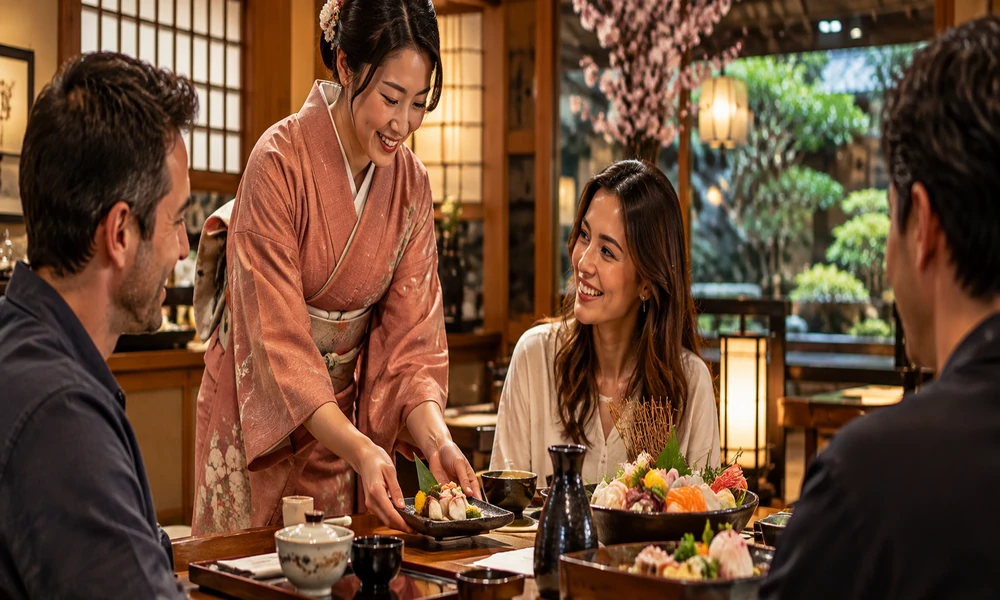
Japanese hospitality, often associated with the concept of omotenashi, places strong emphasis on anticipating guests’ needs and creating a thoughtful experience. In dining, this philosophy can influence everything from the way food is prepared and presented to how guests are welcomed and served. Sushi provides a particularly clear example because a meal can combine craftsmanship, presentation, timing, and personal interaction.
What Omotenashi Means at the Sushi Table
Omotenashi is commonly described as wholehearted care for guests. Rather than simply responding to requests, the philosophy involves paying attention to circumstances and details that can improve the overall experience. Japan’s tourism authorities connect its roots with the traditional tea ceremony, where the host carefully considers the guest throughout the experience.
At a sushi counter, this idea can appear through the pacing of dishes, careful preparation, presentation, and communication between chef and diner. The experience does not necessarily depend on elaborate service. Small details can demonstrate consideration just as effectively.
How Presentation Shapes the Experience
Japanese cuisine places considerable emphasis on seasonality, balance, appearance, and the presentation of ingredients. Japan’s Ministry of Agriculture, Forestry and Fisheries describes Japanese cuisine as engaging multiple senses, including sight, smell, touch, hearing, and taste.
Sushi naturally lends itself to this approach. The color of the fish, arrangement of each piece, type of garnish, and choice of serving ware can influence how diners perceive a meal before they even taste it.
The Role of the Sushi Chef
In an omakase-style meal, diners give the chef considerable freedom to determine what is served. This creates an opportunity to consider available ingredients, seasonality, and the progression of the meal. Japan’s National Tourism Organization notes that omakase gives chefs creative freedom while emphasizing carefully selected ingredients.
This relationship can make sushi dining feel more personal than simply ordering individual menu items. The chef’s decisions become part of the overall experience.
Bringing Japanese Hospitality to American Sushi Dining
For diners in the United States, the principles of omotenashi can offer a different perspective on the restaurant experience. American sushi restaurants may interpret these principles in their own ways while maintaining an emphasis on attentiveness, presentation, and quality.
Sushi Inc., for example, incorporates elements that contribute to a welcoming group dining environment, including hand-rolled sushi, varied menu options, and an atmosphere designed for guests to enjoy the meal together. Its approach can be explored through the restaurant’s official website, where its menu and dining experience are presented for local customers.
Ultimately, Japanese hospitality demonstrates that exceptional sushi dining involves more than what is placed on the plate. The care surrounding the food, from preparation and presentation to service and atmosphere, can become an essential part of how the meal is experienced and remembered.