


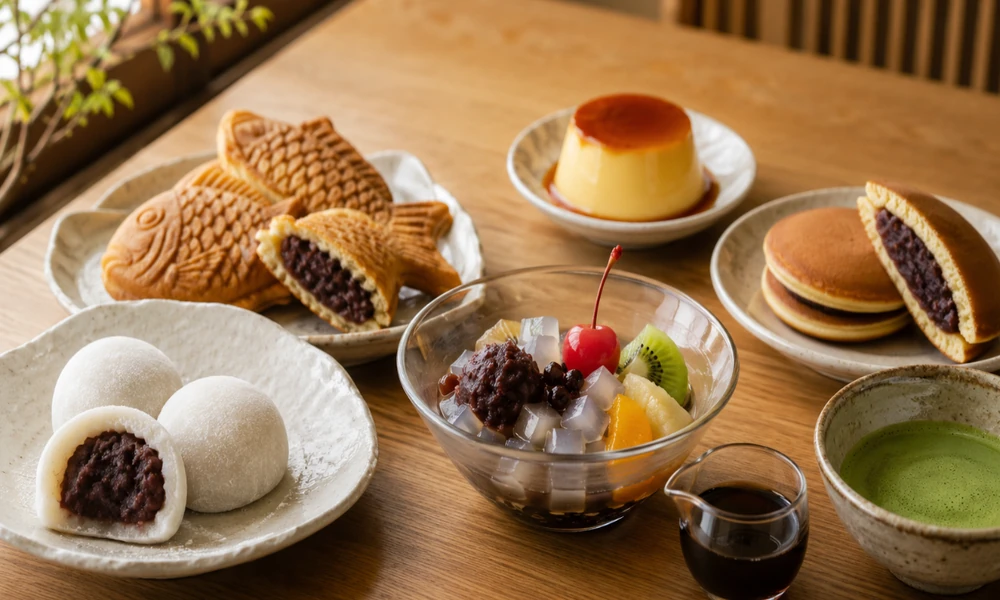
Matcha often gets the most attention when people think about Japanese sweets. Its earthy flavor works well in cakes, ice cream, cookies, and drinks. Still, Japanese dessert culture offers far more than green tea.
A good Japanese desserts list includes chewy rice cakes, light jelly bowls, warm filled pastries, smooth caramel custard, and fluffy pancakes. Many of these treats rely on simple ingredients, gentle sweetness, and contrasting textures.
Here are five Japanese desserts worth trying when you want to explore beyond matcha.
Mochi: Soft, Chewy, and Versatile
Mochi is made from glutinous rice that is steamed and pounded until it becomes smooth and stretchy. Its chewy texture makes it different from most Western cakes and pastries.
Mochi might be served plain, grilled, coated with soybean powder, or filled with sweet red bean paste. Daifuku is a popular filled version. Some varieties contain fruit, cream, or ice cream.
Fresh mochi has a soft texture and mild flavor. The filling often provides most of the sweetness. Red bean paste adds an earthy taste, while fruit brings a brighter finish.
Because mochi is sticky and dense, it should be eaten in small bites and chewed carefully.
Anmitsu: A Refreshing Dessert Bowl
Anmitsu is a colorful dessert built around cubes of kanten jelly. Kanten is made from agar and has a firm, clean texture.
The jelly is usually served with fruit, sweet red bean paste, and small pieces of mochi. A dark syrup called kuromitsu is poured over the bowl before eating. Some versions include ice cream or another seasonal topping.
Each spoonful tastes a little different. One bite might contain cool jelly and fruit, while the next combines rich red bean paste with syrup.
Anmitsu is an excellent choice for someone who prefers a refreshing dessert that does not feel too heavy.
Taiyaki: A Warm Fish-Shaped Treat
Taiyaki is a fish-shaped cake cooked in a special molded pan. Despite its appearance, it usually contains no fish.
The outside has a thin, lightly crisp surface with a soft cake-like layer underneath. Traditional taiyaki contains sweet red bean paste, though other fillings include custard, chocolate, cheese, or sweet potato.
Fresh taiyaki is especially satisfying because the warm shell contrasts with the smooth filling. The detailed fish shape also makes it easy to recognize on any Japanese desserts list.
It is often enjoyed as a casual street snack rather than a formal plated dessert.
Purin: Japanese Caramel Custard
Purin is a Japanese-style caramel pudding. It resembles crème caramel, but it often has a firmer texture and a simple presentation.
The custard is made with eggs, milk, and sugar. A layer of dark caramel sits on top after the pudding is turned out of its mold.
The flavor is familiar but balanced. The custard tastes creamy and mild, while the caramel adds a slightly bitter note that prevents the dessert from becoming overly sweet.
Purin is a good starting point for anyone new to Japanese desserts. Its texture and flavor feel familiar, yet its light sweetness reflects the restrained style found in many Japanese treats.
Dorayaki: Fluffy Pancakes With Red Bean Filling
Dorayaki consists of two small, fluffy pancakes with sweet red bean paste between them. The pancakes are soft and slightly moist, with a mild honey-like flavor.
The traditional filling is smooth or chunky anko, which is made from azuki beans and sugar. Modern versions might include matcha cream, chestnut paste, chocolate, or custard.
Dorayaki is easy to carry and eat, making it a popular snack with tea or coffee. It feels more filling than anmitsu or purin, but it remains lighter than many frosted cakes.
Which Japanese Dessert Should You Try First?
Choose mochi if you enjoy chewy textures. Try anmitsu for something cool and refreshing. Taiyaki is ideal when you want a warm handheld snack, while purin offers smooth comfort. Dorayaki suits anyone craving a soft, cake-like treat.
Matcha still deserves its place, but it represents only one part of a much larger dessert tradition. Exploring this Japanese desserts list reveals how rice, beans, fruit, eggs, and simple batters create sweets with distinct textures and gentle flavors.
This post was written by a professional at Fortu. Fortu stands out among the top Restaurants St Petersburg FL, offering an elevated Pan-Asian dining experience in the heart of St. Petersburg, Florida. Celebrating Asia’s vibrant and diverse culture, Fortu introduces bright and bold flavors to a bright and bold city with a menu of locally and sustainably sourced options, from small bites to hearty delicacies. Whether winding down from a beach day or celebrating a special occasion, guests can enjoy a lush, alluring atmosphere and an authentic taste of Asia’s divine cuisine at one of the finest Restaurants In Downtown St Petersburg FL.